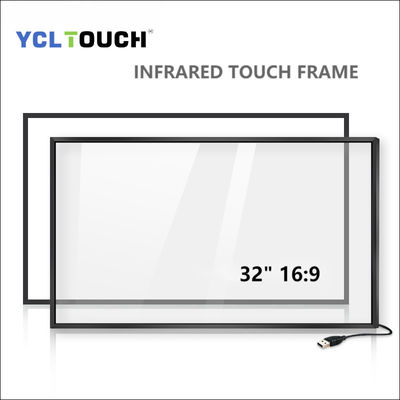
Touch that keeps up with the game
Gaming and entertainment are stated applications in the manufacturer's programme, and the catalogue builds for them directly: a 19-inch 4:3 panel listed as an interactive touch game table surface, an 80-inch gaming panel, and the frame sizes that turn furniture into playing surfaces. Infrared sensing suits gaming for structural reasons — no surface film to wear through under thousands of daily touches, response fast enough that the game, not the sensor, sets the pace, and multi-touch headroom for two-player table formats.
Specifying for gaming duty
Latency. Panel listings in this catalogue state response from 10 ms down to under 8 ms on selected frames, and component modules in the 5 ms class. For rhythm, reaction and multi-player formats, declare the title type in the inquiry and the build is specified on response first. Simultaneous hands. A two-player table needs true multi-touch — 20 points is the practical floor for two full hands; the touch points guide explains the arithmetic. Surface. The touch surface in an IR build is your own glass or acrylic over the display — replaceable when scratched, which in amusement duty is a when, not an if. Foil builds exist for curved entertainment surfaces (a curved flexible foil is listed in the foil family).
Formats from the catalogue
- Table surfaces: 32–55 inch frames from the multi touch family
- Upright amusement and redemption machines: 19–24 inch overlay kits, 4:3 and 16:10
- Feature surfaces: 65–80 inch frames for attraction pieces
Gaming approvals and cabinet standards belong to your jurisdiction and cabinet design; the touch layer's job is to be specified, fast and replaceable. Send cabinet drawings or the display model with the inquiry.